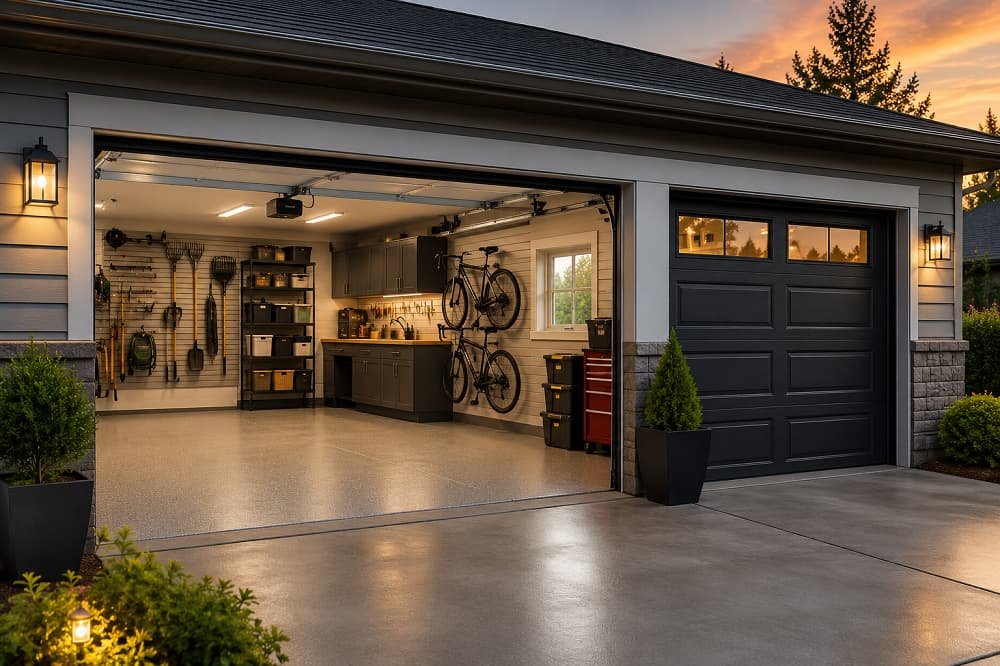
A small garage can quickly become one of the most useful spaces in your home—or one of the most frustrating. Limited square footage means every inch matters. Between parking a vehicle, storing tools, organizing seasonal items, and finding room for bicycles or outdoor equipment, poor use of space can make a compact garage feel even smaller.
While shelves, cabinets, and wall-mounted storage can improve organization, one feature is often overlooked: the residential garage door.
The right garage door can improve how a small garage functions, enhance accessibility, support better insulation, increase security, and even make the exterior of your home more attractive. Choosing a door that fits the space and your everyday needs can help you get more practical value from a garage without expanding the building itself.
In this guide, we’ll explore how a residential garage door can make a small garage more practical and what to consider when choosing the right option.
Contents
- Why Garage Door Choice Matters in a Small Garage
- Choose a Space-Efficient Door Design
- Improve Access and Everyday Convenience
- Use Better Insulation for Year-Round Comfort
- Make Security a Priority
- Add Smart Features for More Convenience
- Improve Natural Light Without Sacrificing Privacy
- Coordinate the Door With Your Home’s Exterior
- Plan Storage Around the Garage Door System
- Maintain Your Garage Door for Long-Term Performance
- Common Mistakes to Avoid
- Frequently Asked Questions
Why Garage Door Choice Matters in a Small Garage
In a large garage, a few inches of lost space may not seem important. In a smaller garage, however, every part of the layout affects how comfortably you can park, walk, store items, and access equipment.
A garage door is more than an entry point. It influences:
- Available headroom
- Ceiling space
- Wall clearance
- Vehicle access
- Indoor temperature
- Security
- Lighting
- Exterior appearance
For example, a door system that requires significant ceiling space may limit where you can install storage racks or lighting. A poorly insulated door can also make a small garage uncomfortable during extreme weather.
Thinking about the garage door as part of the overall layout—not as an isolated feature—can help you make better use of a compact space.
Choose a Space-Efficient Door Design
The way a garage door opens and operates can have a direct impact on usable space.
Sectional Garage Doors
Sectional garage doors are a common choice for residential properties. They are made from horizontal panels that move upward and follow tracks along the ceiling.
Because the door opens vertically, it does not require additional driveway space in front of the garage.
This can be especially useful for homes with short driveways.
However, the overhead track system requires ceiling space, so it is important to plan lighting, storage, and other ceiling-mounted features around it.
Roll-Up Garage Doors
Roll-up doors move vertically and coil above the opening.
Depending on the design, this can reduce the amount of horizontal ceiling track required.
For some compact garages, this may create more usable overhead space. However, residential suitability, appearance, insulation, and budget should all be considered before choosing this option.
Side-Sliding Garage Doors
Side-sliding doors move horizontally along a wall rather than overhead.
This can be useful when ceiling space is needed for storage, lighting, or mechanical equipment.
The trade-off is that the wall used for the track must remain relatively clear.
The Best Choice Depends on Your Layout
Before selecting a door, consider:
- Ceiling height
- Wall space
- Driveway length
- Storage requirements
- Vehicle size
- Existing obstructions
The best design is the one that works with your garage rather than taking valuable space away from it.
Improve Access and Everyday Convenience
A small garage can feel cramped if entering and leaving is difficult.
A well-chosen residential garage door can improve everyday convenience by providing smooth, reliable access.
Consider the width and height of the opening carefully.
If your vehicle barely fits through the opening, daily parking can become stressful. Small differences in door dimensions can have a significant effect on usability.
When planning a replacement or new installation, think about:
- The width of your vehicle
- Mirror clearance
- Headroom requirements
- Space for opening car doors inside
- Whether the garage is used for storage as well as parking
A properly sized opening can make a small garage feel easier to use, even when the physical footprint remains unchanged.
Use Better Insulation for Year-Round Comfort
Small garages are often located directly next to or beneath living areas. This means the garage door can influence both comfort and energy efficiency.
An insulated residential garage door may help reduce heat transfer between the garage and outdoors.
This can be particularly useful if your garage is used as:
- A workshop
- A hobby space
- A home gym
- A storage area
- A laundry or utility space
Insulation can also help reduce outside noise.
When comparing garage doors, look at the insulation materials and performance specifications rather than assuming that every insulated door performs the same way.
The right level of insulation depends on your climate, how the garage is used, and whether the space is connected to conditioned areas of the home.
Make Security a Priority
A garage often contains valuable items, including:
- Vehicles
- Power tools
- Bicycles
- Sports equipment
- Lawn and garden equipment
- Personal storage
In a small garage, these items may be located close to the entrance, making door security especially important.
Features worth considering include:
- Strong locking mechanisms
- Durable materials
- Reinforced construction
- Secure automatic openers
- Rolling or changing access codes
- Smartphone notifications
- Automatic closing features
Security is not only about preventing unauthorized access. A reliable door system can also help reduce the risk of accidental openings or doors being left open.
Add Smart Features for More Convenience
Smart garage technology can make a compact garage easier to manage.
Depending on the system, smart features may allow you to:
- Check whether the door is open or closed
- Receive activity notifications
- Open or close the door remotely
- Set automatic closing schedules
- Grant temporary access to visitors
- Monitor access history
These features can be useful when the garage is frequently used for deliveries, family access, or storage.
For a small garage, smart controls may also reduce the need for additional keypads, remotes, or access equipment that can add clutter.
However, convenience should be balanced with security. Use strong account passwords, enable available security settings, and keep connected devices updated.
Improve Natural Light Without Sacrificing Privacy
A dark garage can feel smaller than it really is.
Garage doors with windows can bring natural light into the space and make the interior feel more open.
However, privacy and security should also be considered.
Options may include:
- Frosted glass
- Obscured glass
- High-mounted windows
- Small window panels
- Tinted glass
Windows placed near the top of the garage door can provide daylight while limiting direct visibility into the garage.
Natural light can be especially valuable if you use the garage as a workspace.
When selecting windows, consider insulation, safety, privacy, and how the window design fits the exterior of your home.
Coordinate the Door With Your Home’s Exterior
A practical garage door can also improve curb appeal.
Because the garage door may occupy a significant portion of the front of the house, its color, material, and design can influence the overall appearance of the property.
Popular residential styles include:
- Traditional raised-panel doors
- Modern flush-panel doors
- Carriage-house designs
- Contemporary glass and aluminum doors
- Wood-look finishes
For a small garage, the right visual design may even help the exterior appear more balanced.
For example, a simple design with clean lines can complement a modern home, while a carriage-style door may suit a more traditional property.
The goal is to choose a design that looks intentional rather than overwhelming the rest of the exterior.
Plan Storage Around the Garage Door System
One of the most effective ways to improve a small garage is to design storage around the door’s operating system.
Before installing shelves or ceiling racks, identify:
- Door tracks
- Springs
- Cables
- Opener location
- Clearance zones
- Emergency release access
Do not block or interfere with moving garage door components.
Instead, use unused wall areas for:
- Vertical shelving
- Pegboards
- Tool organizers
- Bike hooks
- Narrow cabinets
In some garages, carefully planned ceiling storage may also be possible, provided it does not interfere with the door or opener.
Keeping frequently used items close to the entrance can also reduce the need to move around a parked vehicle.
Maintain Your Garage Door for Long-Term Performance
A garage door is a large moving system that depends on multiple components working together.
Regular maintenance can help identify problems before they become more serious.
Basic maintenance may include:
- Inspecting the door for visible damage
- Checking weather seals
- Keeping tracks clear
- Listening for unusual sounds
- Testing safety reversal features
- Checking remote controls and smart features
Some components, especially springs and high-tension hardware, can be dangerous to repair without proper training.
If you notice a broken spring, damaged cable, major imbalance, or unusual door movement, it is generally safer to contact a qualified garage door professional.
Regular professional inspection may also help identify worn parts and maintain reliable operation.
Common Mistakes to Avoid
Choosing Appearance Over Function
A garage door may look great but still be poorly suited to the available space.
Always consider clearance, insulation, access, and storage needs.
Ignoring the Door’s Operating Space
Tracks, openers, and moving panels require clearance.
Plan shelves and storage carefully to avoid interference.
Selecting the Wrong Size
Measure carefully and consider your current and future vehicle needs.
A door that provides minimal clearance can make everyday use frustrating.
Forgetting About Insulation
An uninsulated garage door may be sufficient for some detached storage garages, but it may be less suitable for garages attached to living spaces or used as work areas.
Neglecting Safety and Maintenance
A garage door should be inspected and maintained regularly.
Do not ignore unusual sounds, uneven movement, or visible damage.
Frequently Asked Questions
What type of garage door is best for a small garage?
The best type depends on the garage layout. Sectional doors are popular because they open vertically and do not require additional driveway clearance. Side-sliding or roll-up designs may be useful when ceiling or wall space requirements differ.
Before choosing, measure the available space and consider where you plan to install storage, lighting, and equipment.
Can an insulated garage door make a small garage more comfortable?
Yes. An insulated door can help reduce heat transfer and may improve comfort, especially when the garage is attached to the home or used as a workspace.
The actual benefit depends on the overall construction of the garage, local climate, and other sources of heat loss or gain.
Do garage door windows reduce privacy?
They can, depending on their size and placement. Frosted, obscured, tinted, or high-mounted windows can provide natural light while reducing direct visibility into the garage.
How can I create more storage space in a small garage?
Use vertical wall space with shelves, cabinets, hooks, and pegboards. Before installing overhead storage, make sure it does not interfere with the garage door, tracks, opener, or safety components.
How often should a residential garage door be maintained?
Homeowners can perform basic visual checks periodically and test safety features according to the manufacturer’s instructions. Professional service intervals depend on the door system, usage, and manufacturer recommendations.
Final Thoughts
A small garage does not have to feel crowded or impractical. With thoughtful planning, the right residential garage door can improve access, comfort, security, storage possibilities, and the overall appearance of your home.
The key is to think beyond the door itself.
Consider how it opens, how much space the operating system requires, whether insulation is needed, and how the rest of the garage can be organized around it. A well-planned solution can help you get more from every square foot.
Choose a residential garage door that fits your space, supports your daily routine, and turns your small garage into a more practical and efficient part of your home.